About 69 minutes
Cleopatra — Volume 02 — Story, Setting & Ideas
Technology Airships Imagined Futures
15,783 recorded words. 2 minutes difference from this book's estimate.
View Gutenberg source #5474
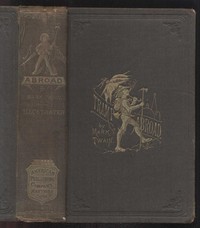
A Tramp Abroad — Volume 01 — A Reader’s Guide can be approached with a clearer sense of reading commitment from its source measurements: 16,298 words, 1 hr 11 min estimated reading time, and 3 detected text sections.
The text analysis averages about 25.0 words per sentence, while the detected sections provide another way to judge how the source is divided.
Project Gutenberg metadata also associates the work with “Humorous stories,” connecting these edition facts with the source record’s subject description.
Explore this collection
These alternatives are selected using recorded categories and estimated reading time.
About 69 minutes
Technology Airships Imagined Futures
15,783 recorded words. 2 minutes difference from this book's estimate.
View Gutenberg source #5474About 78 minutes
Technology Airships Imagined Futures
17,928 recorded words. 7 minutes difference from this book's estimate.
View Gutenberg source #8147About 82 minutes
Technology Airships Imagined Futures
18,850 recorded words. 11 minutes difference from this book's estimate.
View Gutenberg source #5783Search stored excerpts and compare books → Choose by your preferences →
Choices use stored catalog measurements. Estimates vary with reading speed. A shared category is a catalog label, not a claim that two books have the same argument or literary quality.
Search reads excerpt text stored with this catalog and links to its associated Gutenberg record. The connection is stored in the site database; this tool does not recheck that every excerpt is word-for-word identical to that external record. Excerpt search does not cover every chapter and does not verify historical publication dates.
Catalog snapshot checked: 2026-09-25. Coverage: 95 public books, 95 available source excerpts.
Read the complete public-domain text at its original source.
Read on Project GutenbergThe first volume of A Tramp Abroad opens with a characteristic Twainian premise: the narrator decides to walk across Europe because it has been many years since anyone attempted such a feat. But the journey quickly stalls in Heidelberg, where the bulk of these excerpts take place. The text is less a travelogue than a series of set pieces—a raven conversation, a blue-jay anecdote, and a prolonged look at student dueling customs. Twain’s voice oscillates between deadpan reportage and elaborate comic digression, as when he describes the portier of the Schloss Hotel or the systematic sharpening of dueling swords. Readers should expect a leisurely, anecdotal structure rather than a linear itinerary.
The narrative barely leaves Heidelberg in this volume. After arriving by steamer, the narrator settles at the Schloss Hotel and devotes chapters to local color: the view of Heidelberg Castle, the Neckar River, and the town’s student population. Twain’s descriptions are precise but often undercut by humor. For instance, he notes that the hotel has a new feature—a portier who “understands his business”—and then spends a paragraph detailing the man’s elaborate uniform and ceremonial duties. The raven encounter in the woods is another set piece: the bird’s laughter at the narrator’s German prompts a meditation on animal language. These episodes establish a pattern of observation that is both ethnographic and self-mocking.
Chapter III is entirely given over to Jim Baker’s blue-jay yarn, a framed story about a jay trying to fill a knot-hole with acorns. The tale is a masterpiece of dialect and pacing, with Baker claiming to understand jay language. Twain presents it as a digression, but it exemplifies his method: a seemingly trivial anecdote becomes a commentary on persistence, folly, and the absurdity of systems. The jay’s frustration—calling in friends, turning the hole into a mystery—mirrors the narrator’s own tramping project. Readers should note how Twain embeds this folkloric story within a travel framework, blurring the line between reportage and invention.
Chapters V through VII offer a detailed, almost clinical account of student dueling at Heidelberg. Twain describes the dueling room, the sharpening of swords, and the protocols of challenge and response. He notes that students fight two days a week for seven or eight months of the year, a custom two hundred and fifty years old. The tone is neutral but the details are grim: wounds are described as “sickening,” faces are “mutilated,” and the surgeon intervenes only when blood obscures vision. Twain’s focus on the system—the corps colors, the armed neutrality, the volunteer system—suggests a fascination with institutionalized violence. The excerpts do not reveal whether the narrator participates, leaving the reader to wonder how this spectacle fits into his tramping plan.
In Chapter IV, Twain contrasts the German gymnasium system with university life. He claims that gymnasium students emerge with knowledge “burnt into them,” while university students enjoy “large liberty” before entering professional slavery. The description is satirical but grounded in specific observations: the student attends only lectures in his specialty, drinks beer, and tows his dog. Twain’s portrait of the “Beer King” and the industrious versus idle students reinforces a theme of structured leisure. This section provides context for the dueling chapters, suggesting that the violence is part of a broader culture of ritualized release. The excerpts do not resolve whether Twain endorses or condemns this system; he simply reports it with his characteristic deadpan.
This first volume of A Tramp Abroad is best read as a collection of comic essays loosely tied to a walking tour. The narrator’s voice is the unifying element: skeptical, curious, and prone to digression. Readers should pay attention to the framing devices—the raven, the blue-jay, the dueling protocols—as they reveal Twain’s method of using specific, often absurd details to explore broader cultural patterns. The journey itself remains largely offstage, a pretext for observation.
There’s a particular ache in watching Twain’s dueling students treat scars like souvenirs, the same uneasy smile I get reading about fear in The War Terror — Context and Discussion. Both books keep that old, worn question close: how we dress up violence as ritual, then call it character. I think of that whenever I pass a fencing hall now.
Use these questions to collect your thoughts before moving on.