About 391 minutes
Manuel Pereira; Or, The Sovereign Rule of South Carolina — Edition Insights
Sea Voyages Pirate Adventures
89,703 recorded words. 37 minutes difference from this book's estimate.
View Gutenberg source #4680
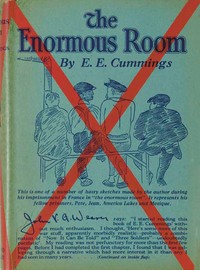
Before opening The Enormous Room — A Closer Reading, the edition data offers a quick orientation: 98,303 words, 7 hr 8 min estimated reading time, and 15 detected text sections.
The text analysis averages about 19.5 words per sentence, while the detected sections provide another way to judge how the source is divided.
Project Gutenberg metadata also associates the work with “Autobiographical fiction,” connecting these edition facts with the source record’s subject description.
Explore this collection
These alternatives are selected using recorded categories and estimated reading time.
About 391 minutes
Sea Voyages Pirate Adventures
89,703 recorded words. 37 minutes difference from this book's estimate.
View Gutenberg source #4680About 373 minutes
Sea Voyages Pirate Adventures
85,740 recorded words. 55 minutes difference from this book's estimate.
View Gutenberg source #6987About 524 minutes
Sea Voyages Pirate Adventures
120,456 recorded words. 96 minutes difference from this book's estimate.
View Gutenberg source #5128Search stored excerpts and compare books → Choose by your preferences →
Choices use stored catalog measurements. Estimates vary with reading speed. A shared category is a catalog label, not a claim that two books have the same argument or literary quality.
Search reads excerpt text stored with this catalog and links to its associated Gutenberg record. The connection is stored in the site database; this tool does not recheck that every excerpt is word-for-word identical to that external record. Excerpt search does not cover every chapter and does not verify historical publication dates.
Catalog snapshot checked: 2026-09-25. Coverage: 95 public books, 95 available source excerpts.
Read the complete public-domain text at its original source.
Read on Project GutenbergThe catalog classifies The Enormous Room under "Sea Voyages & Pirate Adventures," yet the excerpts depict no ships or pirates. Instead, the text opens with a father's letter to President Wilson protesting the imprisonment of two American ambulance drivers—one of them Cummings himself. The mismatch between catalog subject and actual content is stark: this is a memoir of confinement, not adventure on the high seas. The excerpts reveal a work that uses modernist techniques—fragmented syntax, abrupt shifts in register, and typographic play—to render the experience of detention at La Ferté Macé. Cummings's prose oscillates between bureaucratic documentation and lyrical, almost hallucinatory description, as when he recounts the suffocation of prisoners in an air-tight cell.
The Project Gutenberg record assigns The Enormous Room to "Sea Voyages & Pirate Adventures," a category that bears no relation to the text's content. The excerpts contain no nautical elements; the setting is a concentration camp in rural France. This misclassification likely stems from a cataloging error, but it highlights how the work resists easy genre labeling. Cummings's narrative is autobiographical, yet it employs fictional techniques—heightened dialogue, symbolic naming (e.g., "The Black Holster," "The Machine-Fixer"), and a picaresque structure. The catalog also lists "War stories" and "World War, 1914-1918 — France — Fiction," which are more accurate, though the text is nonfiction. The presence of "Americans — France — Fiction" and "Concentration camp inmates — Fiction" further blurs the line between memoir and novel. Readers expecting a swashbuckling sea tale will find instead a claustrophobic, bureaucratic nightmare.
The excerpts foreground the camp's administrative apparatus: the Directeur, Surveillant, Gestionnaire, and plantons form a hierarchy of petty tyrants. Cummings describes the cabinot—a punishment cell—where guards stuff a mattress around the door to make it air-tight and set it on fire, nearly asphyxiating the inmates. This episode is rendered with clinical precision: "the singing was supplanted by coughing; then the coughing stopped." The narrator's tone is detached, almost reportorial, yet the violence is unmistakable. The camp's rules are arbitrary; the Directeur wields "the Lie upon his slavering tongue" as a weapon. Cummings's prose captures the absurdity of a system that punishes without cause, where the threat of death is met with bureaucratic indifference. The text's structure mirrors this chaos: chapters titled "A Pilgrim's Progress" and "Apollyon" invoke Bunyan, but the journey is not toward salvation but deeper into confinement.
Cummings populates the narrative with a gallery of fellow prisoners, each rendered through idiosyncratic speech and gesture. The "Machine-Fixer" trembles and curses the authorities; Celina, a woman prisoner, fights six guards after being locked in a smoke-filled cell. The narrator's voice shifts between first-person witness and third-person observer, as when he notes, "I spoke with both balayeurs that night. They told me, independently, the same story." This technique creates a sense of communal testimony. The prose is marked by sudden italics, French phrases, and compound words ("velocitous exit"), reflecting Cummings's background as a poet. The "Enormous Room" itself becomes a character—a space of both oppression and solidarity. The excerpts suggest that the book's power lies not in plot but in the accumulation of such portraits, each a small act of resistance against the dehumanizing machine of the camp.
Readers should approach The Enormous Room as a hybrid work: part memoir, part modernist experiment, part social critique. The catalog's mislabeling is a reminder that Cummings's text defies conventional categories. Pay attention to the interplay between official documents (letters, reports) and lyrical passages; this tension mirrors the conflict between individual experience and institutional power. The excerpts offer only a fragment of the full work, but they suggest a narrative that is as much about language and perception as about war and imprisonment.
Years of shelving have taught me that some books whisper to each other. The Enormous Room taught me how confinement can sharpen human character into strange, vivid shapes. That same stubborn light flickers through Cleopatra — Volume 05 — A Closer Reading, where a queen’s gilded cage holds a spirit just as unbroken, just as absurdly magnificent.
Answer a few questions and save a private reflection on this device.