About 303 minutes
Driven Back to Eden — Themes and Context
Young Readers Enchanted Adventures
69,611 recorded words. 8 minutes difference from this book's estimate.
View Gutenberg source #5269
For A Peep Behind the Scenes — Story, Setting & Ideas, the stored edition analysis reports 71,479 words, 5 hr 11 min estimated reading time, and 7 detected text sections.
The text analysis averages about 18.3 words per sentence, while the detected sections provide another way to judge how the source is divided.
Project Gutenberg metadata also associates the work with “Christian life -- Juvenile fiction,” connecting these edition facts with the source record’s subject description.
Explore this collection
These alternatives are selected using recorded categories and estimated reading time.
About 303 minutes
Young Readers Enchanted Adventures
69,611 recorded words. 8 minutes difference from this book's estimate.
View Gutenberg source #5269About 293 minutes
Young Readers Enchanted Adventures
67,163 recorded words. 18 minutes difference from this book's estimate.
View Gutenberg source #5961About 292 minutes
Young Readers Enchanted Adventures
66,983 recorded words. 19 minutes difference from this book's estimate.
View Gutenberg source #7089Search stored excerpts and compare books → Choose by your preferences →
Choices use stored catalog measurements. Estimates vary with reading speed. A shared category is a catalog label, not a claim that two books have the same argument or literary quality.
Search reads excerpt text stored with this catalog and links to its associated Gutenberg record. The connection is stored in the site database; this tool does not recheck that every excerpt is word-for-word identical to that external record. Excerpt search does not cover every chapter and does not verify historical publication dates.
Catalog snapshot checked: 2026-09-25. Coverage: 95 public books, 95 available source excerpts.
Read the complete public-domain text at its original source.
Read on Project GutenbergThe novel begins with a deliberate, almost cinematic slow pace: rain falls "mercilessly" on a Sunday fairground, and the narrator lingers on the contrast between the previous night's brilliant lights and the present "dirty, weather-stained tents." This unhurried observation establishes a world of surface glitter and underlying squalor. The narrative voice is omniscient but restrained, offering details—the "rosy, good-tempered face" of the old man, the caravan door with "two small muslin curtains, tied up with pink ribbon"—without immediate judgment. The pace mirrors the idlers' lingering gaze, inviting the reader to observe before the story accelerates.
The opening chapter's measured description gives way to a swift, almost abrupt shift in tempo when Rosalie's mother dies. The narrative compresses the funeral into a few paragraphs: the service, the cemetery walk, and the moment Rosalie sees Toby's crape. The prose becomes more urgent, with short clauses and a rush of emotion. The narrator steps in with a reflective passage on grief—"a little thing, a very little thing" can open "the flood-gates of sorrow"—which momentarily slows the pace again, creating a rhythm of acceleration and pause. This pattern recurs: the caravan journeys are described in long, lonely sentences, while scenes of performance are clipped and hurried, as if the narrative itself is exhausted by the show.
When Rosalie returns to the stage after her mother's death, the narrative voice adopts a child's disillusioned perspective. The theatre is "just the same"—gilding bright, lamps sparkling—yet "it all looked different." The prose here is flat and repetitive, mimicking Rosalie's numb recognition. The narrator refrains from editorializing; instead, the contrast between the unchanged setting and the changed child is conveyed through simple, parallel structures. This section's pacing is deliberate and hollow, a stark departure from the earlier descriptive richness. The voice becomes almost documentary, recording the "soiled and tumbled" white dress and the "crushed and faded" wreath without commentary, letting the objects speak for the loss.
The most sustained change in pace occurs during Rosalie's solitary nights in the caravan. The narrative slows to a crawl, dwelling on the "hooting of the owls" and the "soughing of the wind." Sentences lengthen, accumulating sensory details that emphasize isolation. The voice shifts into a liturgical cadence as Rosalie repeats her evening prayer "again and again," entreating the Good Shepherd to carry her. This repetition creates a hypnotic rhythm, a stark contrast to the earlier flurry of fairground activity. The pacing here is not merely descriptive but performative: the reader experiences the weight of time passing. The narrator's omniscience recedes, leaving Rosalie's voice to fill the silence, a technique that underscores her vulnerability and the story's emotional core.
Readers attuned to narrative rhythm will find that Walton uses tempo as a tool of characterization: the fair's garish speed gives way to the caravan's stillness, and each shift marks a change in Rosalie's inner world. Pay attention to how the narrator's distance varies—sometimes close, sometimes observational—and how objects (the curtains, the dress, the crape) carry emotional weight. The novel's structure rewards those who notice these fluctuations, as they reveal the story's true subject: not the theatre, but the child learning to see through it.
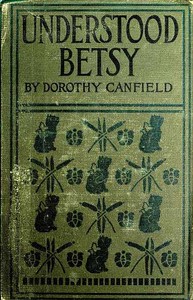
I thought about that opening in A Peep Behind the Scenes — how the slow, steady quiet before the loss made the rushing grief feel almost unbearable. It reminded me of the gentle pacing in Understood Betsy — Context and Discussion, where a child’s small world shifts so softly you hardly notice until everything feels different. Some stories just stay, don’t they.
Save your reaction, strongest insight, and memorable passage.