About 226 minutes
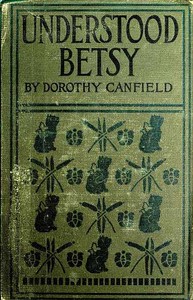
Understood Betsy — Context and Discussion
Young Readers Enchanted Adventures
51,883 recorded words. 30 minutes difference from this book's estimate.
View Gutenberg source #5347
The Rover Boys in New York; Or, Saving Their Father's Honor — Text and Context can be approached with a clearer sense of reading commitment from its source measurements: 58,673 words, 4 hr 16 min estimated reading time, and 6 detected text sections.
The text analysis averages about 11.8 words per sentence, while the detected sections provide another way to judge how the source is divided.
Project Gutenberg metadata also associates the work with “Detective and mystery stories,” connecting these edition facts with the source record’s subject description.
Explore this collection
These alternatives are selected using recorded categories and estimated reading time.
About 226 minutes
Young Readers Enchanted Adventures
51,883 recorded words. 30 minutes difference from this book's estimate.
View Gutenberg source #5347About 287 minutes
Young Readers Enchanted Adventures
65,874 recorded words. 31 minutes difference from this book's estimate.
View Gutenberg source #5631About 292 minutes
Young Readers Enchanted Adventures
66,983 recorded words. 36 minutes difference from this book's estimate.
View Gutenberg source #7089Search stored excerpts and compare books → Choose by your preferences →
Choices use stored catalog measurements. Estimates vary with reading speed. A shared category is a catalog label, not a claim that two books have the same argument or literary quality.
Search reads excerpt text stored with this catalog and links to its associated Gutenberg record. The connection is stored in the site database; this tool does not recheck that every excerpt is word-for-word identical to that external record. Excerpt search does not cover every chapter and does not verify historical publication dates.
Catalog snapshot checked: 2026-09-25. Coverage: 95 public books, 95 available source excerpts.
Read the complete public-domain text at its original source.
Read on Project GutenbergThe story opens not with a mystery but with the three Rover brothers—Dick, Tom, and Sam—debating a flight in their biplane, the Dartaway. Their banter about storms and girlfriends at Hope Seminary establishes a light, teasing voice that carries through the early chapters. By the time they reach New York, the tone shifts: the city is described as a “regular bee hive,” and the brothers must navigate crowded streetcars and dingy office buildings. The contrast between their playful college life and the serious task of finding their missing father is set up quickly, with Dick’s visit to broker Jesse Pelter marking the first real tension.
The first excerpt shows the brothers at Brill College, where their conversation revolves around flying, storms, and calling on Dora, Nellie, and Grace. Tom’s teasing and Sam’s mock-poetry interruption reveal a close, joking relationship. This lighthearted tone is deliberate: it establishes the boys as ordinary, fun-loving young men before they are thrust into a serious situation. When they arrive in New York, the prose becomes more observational. Sam’s remark, “My, what a big place New York is!” and his awe at a “fifty stories” building signal that the city itself is a new character—overwhelming and full of hidden dangers. The shift from rural campus to urban maze is one of the book’s key structural moves.
Dick’s visit to Pelter, Japson & Company is the story’s first major plot point. The office is described as “one of the oldest on the street, and also one of the shabbiest,” a detail that hints at the firm’s dubious nature. Dick’s direct question—“Do you know where my father is?”—is met with evasion: Pelter “pretended to arrange some papers on his desk as he spoke and did not look at Dick.” This non-verbal cue, combined with Pelter’s slight start when Dick gives his name, suggests the broker is hiding something. The scene is efficient: in a few paragraphs, the reader learns that Anderson Rover has disappeared, that Pelter is likely involved, and that the brothers will have to investigate on their own.
After the meeting, the brothers split up: Tom takes an auto bus uptown, while Dick and Sam ride a streetcar to Wall Street. This division of labor is a recurring pattern in the series—each brother has a role. Dick is the serious, responsible one; Tom is the fun-loving, impulsive one; Sam is the observant, steady one. The text reinforces this through small actions: Dick carries the address, Sam keeps out of sight, and Tom heads to the Park. The brothers’ teamwork is emphasized without being spelled out. Readers familiar with earlier volumes will recognize this dynamic, but new readers can infer it from the way they coordinate their movements and share information.
The narrative voice is brisk and slightly formal, with occasional slang like “Rats!” and “old corker.” The author, writing as Arthur M. Winfield, addresses readers directly in the introduction, noting that this is the seventeenth volume and that the series has sold nearly a million and a quarter copies. This meta-commentary frames the book as part of a larger, popular franchise. Period details—auto buses, streetcars with “strap seats,” the fifty-story building, and the narrow Wall Street office—ground the story in 1913 New York. These details are not mere decoration; they create a specific, believable setting for the mystery. The elevator is “narrow,” the directory uses old-style numerals, and the office overlooks a restaurant roof—small touches that make the city feel real.
As you read, pay attention to how the brothers’ personalities influence their detective methods. Dick’s directness, Tom’s humor, and Sam’s caution each contribute to the investigation. The early chapters establish a rhythm of banter and action that carries through the book. The mystery unfolds gradually, with clues hidden in dialogue and setting rather than in dramatic reveals. Let the city itself guide your reading—the contrast between the familiar campus and the unfamiliar streets is central to the story’s tension.
Reading how the Rover boys traded campus banter for wary city footsteps, I remembered my own first trip to Manhattan, that same giddy slipping into grown-up trouble. It echoes the strange shift in The Consolidator; or, Memoirs of Sundry Transactions from the World in the Moon — Text and Context, where familiar voices turn to navigating an entirely foreign, moonlit world of suspicion. Both felt less like adventure and more like learning to trust your own judgment.
Capture what you thought, learned, and would like to remember.